Transform Your Health
Breathe Better. Move Better. Feel Better.
Discover personalised physiotherapy solutions designed to improve your respiratory health and overall well-being. Respiratory Physiotherapist, Marbella & San Pedro, Spain.
Meet Rachel Garrod
Rachel Garrod is a highly experienced physiotherapist specializing in respiratory care. With over 20 years of experience, she has dedicated her career to helping individuals improve their breathing and enhance their quality of life. Rachel holds a PhD in Physiotherapy and has published numerous research papers in the field. Her compassionate approach and evidence-based techniques ensure that each patient receives the highest standard of care.
Rachel Garrod
Physiotherapist & Health Consultant
Email: rachelgarrod1@gmail.com
Location: Marbella, Spain

About Me
I am a dedicated physiotherapist with over 20 years of experience in respiratory care. My passion lies in helping individuals improve their breathing and overall health through personalized treatment plans.
Skills & Expertise
Respiratory Physiotherapy
Chronic Disease Management
Health Education
Research & Publications
Services
Explore the range of specialised physiotherapy services offered by Rachel Garrod.
Stop Smoking
Personalised support and strategies to help you quit smoking and improve your respiratory health.
Post-Surgical Recovery
Specialised respiratory physiotherapy to aid recovery and improve breathing after thoracic surgery.
Respiratory Physiotherapy
Tailored treatments to manage and improve chronic respiratory conditions such as COPD and asthma.
Pulmonary Rehabilitation
Comprehensive rehabilitation programs designed to enhance lung function and overall fitness.
Dysfunctional Breathing
Physiotherapy to help you correct dysfunctional breathing, by re-educating your breathing muscles.
Frequently Asked Questions
Find answers to common questions about Rachel’s physiotherapy services and how she can help you achieve better health.
What is Respiratory Muscle Training?
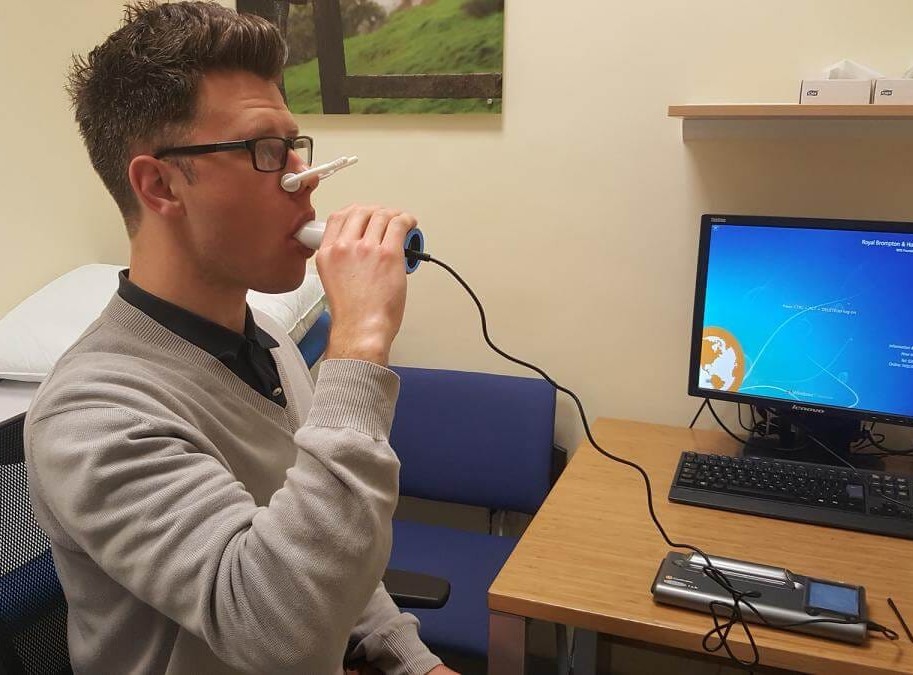
Respiratory Muscle Training (RMT) utilises a gadget that applies resistance either to inhalation, exhalation or both. Think of it as using dumbbells when exercising your arms, the gadgets generally use threshold loading (a spiral) which can be increased or decreased as appropriate. As you breathe in or out, you encounter resistance which results in strengthening of the inspiratory muscles and the diaphragm. This in turn leads to reduced breathlessness and increased ability to walk without breathlessness. There are a number of studies showing the positive benefits of RMT for people with respiratory disease.
I am on Oxygen – can you still help me?
Yes! Many of my patients are on Oxygen, either for 24 hours a day or supplemental oxygen used whilst moving around. Oxygen is a treatment of low Oxygen levels it is not a treatment for breathlessness. Even if you are very limited by breathlessness small improvements in strength can make a big difference to how much you can do. Learning how to control your breathing will make it easier for you to do your daily activities and we may even find you can reduce your Oxygen use!
What should I expect from Respiratory Physiotherapy?
Whether online or face to face visit the first thing I will do is a thorough assessment. We need to identify what your problems are and set realistic goals together. After that I will determine the treatment aims and discuss a treatment schedule with you. Treatment may revolve around improving your strength / balance, improving and correcting breathing pattern. Nothing will be done without your agreement and all treatments will be thoroughly explained to you. I believe education is part of the treatment and will endeavour to help you understand your condition and the steps to help you improve.
How have you made your services Covid safe?
I am fully vaccinated. All equipment such as stethoscopes / pulse oximeter are sanitised between patients. I wear a mask during face to face sessions. Hand sanitiser is used regularly throughout sessions and always between patients. Online sessions are safer if you have concerns regarding Covid 19.
What benefits should I expect from Respiratory Physiotherapy?
Improvements in breathlessness. Improved balance, posture and reduced risk of falling. Improvements in ability to perform activities of daily living. Reduced anxiety. Increased walking distance and exercise tolerance. Better understanding of your condition and medications. Increased strength. Better quality of life.
Book Your Appointment Today
Take the first step towards better health and well-being. Schedule your appointment with Rachel Garrod, a renowned physiotherapist specialising in respiratory health. Don’t wait—your journey to better breathing starts now!
Quick Links
No Results Found
The page you requested could not be found. Try refining your search, or use the navigation above to locate the post.

Are you fatigued?
 If you have Chronic Obstructive Pulmonary Disease (COPD), other respiratory disease, Long COVID or ME/CFM, then you probably also suffer with fatigue. In medicine we describe fatigue as a “sensation of overwhelming tiredness, lack of energy, and feeling of exhaustion that is not relieved by rest and interferes with usual functioning.” Fatigue is a multi-component symptom, one questionnaire, the Multidimensional Fatigue Inventory (MFI-20) describes subjective fatigue as encompassing five different components; general fatigue, physical fatigue, reduced activity, reduced motivation and mental fatigue, such as having difficulty concentrating.
Many conditions are accompanied by fatigue but it is particularly profound in respiratory disease. There are different reasons for this, the obvious one being a lack of oxygen to the cells, but we now also know that in COPD, and other conditions, the immune system is chronically elevated which causes the “flight or fight” response to remain permanently raised. The damaged lungs release pro-inflammatory cytokines (such as TNF-alpha and Interleukin-6) into the bloodstream. These inflammatory chemicals can cross the blood-brain barrier where they trigger something known as “sickness behavior." This is a coping mechanism - your brain wants to help you heal and it manifests as a profound lack of motivation.
This is all good if the inflammation is short lived (like having a cold that recovers in a week or so) but if the inflammation is chronic and persistent, as it is in COPD, then the “sickness behaviour” can in fact make us sicker.
What can help treat this fatigue? A review paper published last year in Respiratory Medicine by Zhang and colleagues (2025) looked at 35 studies that considered fatigue in COPD and found four things that were effective in significantly reducing it. Pulmonary rehabilitation, aerobic exercise, progressive muscle relaxation and acupressure (although the confidence of this data was lower than the others).
Exercise and pulmonary rehabilitation work by improving the cardiovascular system, building strength in the peripheral and respiratory muscles and helping improve respiratory patterns. Pulmonary rehabilitation is effective for people with high initial levels of fatigue and lower levels and even appears to improve quality of life most in those with high levels of fatigue (Maarten Van Herck et al, 2019).
In one study from my team, we showed improvements in General Fatigue, Physical Fatigue and Reduced Activity after a seven-week pulmonary rehabilitation programme (Lewko et al, 2013). Whilst there were no changes in the Motivation or Mental Fatigue we would argue that seven weeks may be too short a period to achieve change in these areas of fatigue.
In fact, motivation is an interesting concept as we often “wait for the right motivation” to start a new plan or hobby, but motivation is triggered by activity - once we start doing the activity and see results we are more likely to feel motivated to continue.
If you are fatigued, and waiting for the motivation to get started with an exercise programme you’d be better off starting, and perhaps, when the benefits kick in then so will the motivation to continue. Click on the link below to find out more about my online pulmonary rehabilitation programme.
https://betterbreathingphysio.com/pulmonary-rehab-programme/
References
Lewko A, Bidgood PL, Jewell A, Garrod R. Evaluation of multidimensional COPD-related subjective fatigue following a pulmonary rehabilitation programme. Respir Med. 2014 Jan;108(1):95-102. doi: 10.1016/j.rmed.2013.09.003. Epub 2013 Sep 14. PMID: 24084060. https://pubmed.ncbi.nlm.nih.gov/24084060/
Van Herck M, Antons J, Vercoulen JH, Goërtz YMJ, Ebadi Z, Burtin C, Janssen DJA, Thong MSY, Otker J, Coors A, Sprangers MAG, Muris JWM, Prins JB, Spruit MA, Peters JB. Pulmonary Rehabilitation Reduces Subjective Fatigue in COPD: A Responder Analysis. J Clin Med. 2019 Aug 20;8(8):1264
https://pmc.ncbi.nlm.nih.gov/articles/PMC6722504/
Xiaona Zhang, Jiali Xue, Yan Chang, Rui Zhang, Jie Zhao, Xindan Li, Hongyan Lu, Xirui Jiang, Fang Yu, Pengfei Yang. Non-pharmacological interventions for fatigue in patients with chronic obstructive pulmonary disease: a systematic review and network meta-analysis,
Respiratory Medicine, Volume 248, 2025. https://doi.org/10.1016/j.rmed.2025.108409.
Do you suffer from fatigue?
 If you have Chronic Obstructive Pulmonary Disease (COPD), other respiratory disease, Long COVID or ME/CFM, then you probably also suffer with fatigue. In medicine we describe fatigue as a “sensation of overwhelming tiredness, lack of energy, and feeling of exhaustion that is not relieved by rest and interferes with usual functioning.” Fatigue is a multi-component symptom, one questionnaire, the Multidimensional Fatigue Inventory (MFI-20) describes subjective fatigue as encompassing five different components; general fatigue, physical fatigue, reduced activity, reduced motivation and mental fatigue, such as having difficulty concentrating.
Many conditions are accompanied by fatigue but it is particularly profound in respiratory disease. There are different reasons for this, the obvious one being a lack of oxygen to the cells, but we now also know that in COPD, and other conditions, the immune system is chronically elevated which causes the “flight or fight” response to remain permanently raised. The damaged lungs release pro-inflammatory cytokines (such as TNF-alpha and Interleukin-6) into the bloodstream. These inflammatory chemicals can cross the blood-brain barrier where they trigger something known as “sickness behavior." This is a coping mechanism - your brain wants to help you heal and it manifests as a profound lack of motivation.
This is all good if the inflammation is short lived (like having a cold that recovers in a week or so) but if the inflammation is chronic and persistent, as it is in COPD, then the “sickness behaviour” can in fact make us sicker.
What can help treat this fatigue? A review paper published last year in Respiratory Medicine by Zhang and colleagues (2025) looked at 35 studies that considered fatigue in COPD and found four things that were effective in significantly reducing it. Pulmonary rehabilitation, aerobic exercise, progressive muscle relaxation and acupressure (although the confidence of this data was lower than the others).
Exercise and pulmonary rehabilitation work by improving the cardiovascular system, building strength in the peripheral and respiratory muscles and helping improve respiratory patterns. Pulmonary rehabilitation is effective for people with high initial levels of fatigue and lower levels and even appears to improve quality of life most in those with high levels of fatigue (Maarten Van Herck et al, 2019).
In one study from my team, we showed improvements in General Fatigue, Physical Fatigue and Reduced Activity after a seven-week pulmonary rehabilitation programme (Lewko et al, 2013). Whilst there were no changes in the Motivation or Mental Fatigue we would argue that seven weeks may be too short a period to achieve change in these areas of fatigue.
In fact, motivation is an interesting concept as we often “wait for the right motivation” to start a new plan or hobby, but motivation is triggered by activity - once we start doing the activity and see results we are more likely to feel motivated to continue.
If you are fatigued, and waiting for the motivation to get started with an exercise programme you’d be better off starting, and perhaps, when the benefits kick in then so will the motivation to continue. Click on the link below to find out more about my online pulmonary rehabilitation programme.
https://betterbreathingphysio.com/pulmonary-rehab-programme/
References
Lewko A, Bidgood PL, Jewell A, Garrod R. Evaluation of multidimensional COPD-related subjective fatigue following a pulmonary rehabilitation programme. Respir Med. 2014 Jan;108(1):95-102. doi: 10.1016/j.rmed.2013.09.003. Epub 2013 Sep 14. PMID: 24084060. https://pubmed.ncbi.nlm.nih.gov/24084060/
Van Herck M, Antons J, Vercoulen JH, Goërtz YMJ, Ebadi Z, Burtin C, Janssen DJA, Thong MSY, Otker J, Coors A, Sprangers MAG, Muris JWM, Prins JB, Spruit MA, Peters JB. Pulmonary Rehabilitation Reduces Subjective Fatigue in COPD: A Responder Analysis. J Clin Med. 2019 Aug 20;8(8):1264
https://pmc.ncbi.nlm.nih.gov/articles/PMC6722504/
Xiaona Zhang, Jiali Xue, Yan Chang, Rui Zhang, Jie Zhao, Xindan Li, Hongyan Lu, Xirui Jiang, Fang Yu, Pengfei Yang. Non-pharmacological interventions for fatigue in patients with chronic obstructive pulmonary disease: a systematic review and network meta-analysis,
Respiratory Medicine, Volume 248, 2025. https://doi.org/10.1016/j.rmed.2025.108409.
Rachel’s CV
Discover how my specialised programs can help you achieve better breathing and well-being. Join for unlimited access to the online resources and community with exercises and information to help you to breathe better.Telephone: +34 699 501 190 Nationality: British...
Projects
Home Services Stop Smoking Dysfunctional Breathing Prices Rachel's CV Testimonials Projects+34 699 501 190rachelgarrod1@gmail.comLinda Vista Baja, Calle Los Eucaliptos 77, San Pedro, Marbella, Spain 29670
Prices
Explore a range of packages designed to enhance your well-being and support your health goals.Includes: Once a week supervised online rehab session in small groups, recorded and sent via email if unable to attend live.Recorded videos of breathing exercises and...
Dysfunctional Breathing
Discover personalised physiotherapy solutions designed to improve your respiratory health and overall well-being.Breathing is essential of course. But not all breathing is good – sometimes it’s downright dysfunctional! Specifically, dysfunctional breathing is when...
Stop Smoking
Rachel Garrod provides the herbal supplement Cytisine, which has been proven to reduce the urge to smoke and helps you quit for good. Stop smoking Quitting smoking can be hard! However motivational interviewing and goal setting with affirmations have been shown to...
Services
Discover personalised physiotherapy solutions designed to improve your respiratory health and overall well-being.What I doPulmonary RehabilitationBreathing Pattern Re-EducationCOPD & Emphysema / BronchitisAsthmaCystic FibrosisLung CancerChronic Heart...
Contact
Linda Vista Baja, Calle Los Eucaliptos 77, San Pedro, Marbella, Spain 29670