Frequently Asked Questions
Find answers to common questions about Rachel’s physiotherapy services and how she can help you achieve better health.
What is Dysfunctional Breathing?
What is Respiratory Muscle Training?
Respiratory Muscle Training (RMT) utilises a gadget that applies resistance either to inhalation, exhalation or both. Think of it as using dumbbells when exercising your arms, the gadgets generally use threshold loading (a spiral) which can be increased or decreased as appropriate. As you breathe in or out, you encounter resistance which results in strengthening of the inspiratory muscles and the diaphragm. This in turn leads to reduced breathlessness and increased ability to walk without breathlessness. There are a number of studies showing the positive benefits of RMT for people with respiratory disease.
I am on Oxygen – can you still help me?
Yes! Many of my patients are on Oxygen, either for 24 hours a day or supplemental oxygen used whilst moving around. Oxygen is a treatment of low Oxygen levels it is not a treatment for breathlessness. Even if you are very limited by breathlessness small improvements in strength can make a big difference to how much you can do. Learning how to control your breathing will make it easier for you to do your daily activities and we may even find you can reduce your Oxygen use!
What should I expect from Respiratory Physiotherapy?
Whether online or face to face visit the first thing I will do is a thorough assessment. We need to identify what your problems are and set realistic goals together. After that I will determine the treatment aims and discuss a treatment schedule with you. Treatment may revolve around improving your strength / balance, improving and correcting breathing pattern. Nothing will be done without your agreement and all treatments will be thoroughly explained to you. I believe education is part of the treatment and will endeavour to help you understand your condition and the steps to help you improve.
How have you made your services Covid safe?
I am fully vaccinated. All equipment such as stethoscopes / pulse oximeter are sanitised between patients. I wear a mask during face to face sessions. Hand sanitiser is used regularly throughout sessions and always between patients. Online sessions are safer if you have concerns regarding Covid 19.
What benefits should I expect from Respiratory Physiotherapy?
Improvements in breathlessness. Improved balance, posture and reduced risk of falling. Improvements in ability to perform activities of daily living. Reduced anxiety. Increased walking distance and exercise tolerance. Better understanding of your condition and medications. Increased strength. Better quality of life.
Get Started with Your Breathing Journey
Quick Links
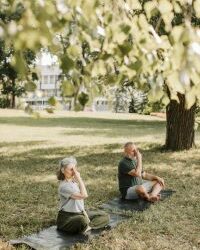
Some things you might not know about nasal breathing
Did you know that the nose is part of the respiratory system? The nose should be our predominate method of inhaling and exhaling air, and there are several good reasons for this. The nostrils, hair and nasal passageways are designed to assist in filtering allergens...
Practicing Self Compassion
Self-compassion is a psychological concept that appears to be receiving long over-due attention. The term refers to a state of mind whereby the individual becomes open to their own suffering, not avoiding or disconnecting from it, but seeing it without judgment or...
Guide: Understanding the Differences: Emphysema vs Bronchitis vs COPD
Summary of this blog by Rachel Garrod Are you confused about the differences between emphysema, bronchitis, and COPD? Don't worry, you're not alone. Read through my extensive guide below, and understand each disease and its differences. Chronic Obstructive Pulmonary...

How Bendy Do I Need To Be ?
Most of us recognise the importance of stretching our muscles, but how much do we really need to do? On the one hand, as we age, muscles, tendons and ligaments become less flexible, this can have negative impacts on our posture and balance. In extreme cases, affecting...
Exercising with Diabetes
As we know diabetes is a huge problem in the UK and world-wide. There are two types of diabetes, Type 1 which is caused by a failure of the pancreas to produce insulin, no one quite knows why and Type 2 which is common in older people. Lifestyle changes are especially...
Colds, COPD & PE
I´ve read a couple of articles this month that have piqued my interest. The first concerns proof of something that I am sure many patients with chronic obstructive pulmonary disease (COPD) and other breathing problems already know. However, sometimes it´s just as...
Am I too ill to exercise?
We all know that exercise is good for us, people who are physically active have fewer health problems, are thinner, and have improved mood compared with sedentary individuals. Exercise provides an array of health benefits such as, reduced blood pressure and lowered...

Are you fatigued?
 If you have Chronic Obstructive Pulmonary Disease (COPD), other respiratory disease, Long COVID or ME/CFM, then you probably also suffer with fatigue. In medicine we describe fatigue as a “sensation of overwhelming tiredness, lack of energy, and feeling of exhaustion that is not relieved by rest and interferes with usual functioning.” Fatigue is a multi-component symptom, one questionnaire, the Multidimensional Fatigue Inventory (MFI-20) describes subjective fatigue as encompassing five different components; general fatigue, physical fatigue, reduced activity, reduced motivation and mental fatigue, such as having difficulty concentrating.
Many conditions are accompanied by fatigue but it is particularly profound in respiratory disease. There are different reasons for this, the obvious one being a lack of oxygen to the cells, but we now also know that in COPD, and other conditions, the immune system is chronically elevated which causes the “flight or fight” response to remain permanently raised. The damaged lungs release pro-inflammatory cytokines (such as TNF-alpha and Interleukin-6) into the bloodstream. These inflammatory chemicals can cross the blood-brain barrier where they trigger something known as “sickness behavior." This is a coping mechanism - your brain wants to help you heal and it manifests as a profound lack of motivation.
This is all good if the inflammation is short lived (like having a cold that recovers in a week or so) but if the inflammation is chronic and persistent, as it is in COPD, then the “sickness behaviour” can in fact make us sicker.
What can help treat this fatigue? A review paper published last year in Respiratory Medicine by Zhang and colleagues (2025) looked at 35 studies that considered fatigue in COPD and found four things that were effective in significantly reducing it. Pulmonary rehabilitation, aerobic exercise, progressive muscle relaxation and acupressure (although the confidence of this data was lower than the others).
Exercise and pulmonary rehabilitation work by improving the cardiovascular system, building strength in the peripheral and respiratory muscles and helping improve respiratory patterns. Pulmonary rehabilitation is effective for people with high initial levels of fatigue and lower levels and even appears to improve quality of life most in those with high levels of fatigue (Maarten Van Herck et al, 2019).
In one study from my team, we showed improvements in General Fatigue, Physical Fatigue and Reduced Activity after a seven-week pulmonary rehabilitation programme (Lewko et al, 2013). Whilst there were no changes in the Motivation or Mental Fatigue we would argue that seven weeks may be too short a period to achieve change in these areas of fatigue.
In fact, motivation is an interesting concept as we often “wait for the right motivation” to start a new plan or hobby, but motivation is triggered by activity - once we start doing the activity and see results we are more likely to feel motivated to continue.
If you are fatigued, and waiting for the motivation to get started with an exercise programme you’d be better off starting, and perhaps, when the benefits kick in then so will the motivation to continue. Click on the link below to find out more about my online pulmonary rehabilitation programme.
https://betterbreathingphysio.com/pulmonary-rehab-programme/
References
Lewko A, Bidgood PL, Jewell A, Garrod R. Evaluation of multidimensional COPD-related subjective fatigue following a pulmonary rehabilitation programme. Respir Med. 2014 Jan;108(1):95-102. doi: 10.1016/j.rmed.2013.09.003. Epub 2013 Sep 14. PMID: 24084060. https://pubmed.ncbi.nlm.nih.gov/24084060/
Van Herck M, Antons J, Vercoulen JH, Goërtz YMJ, Ebadi Z, Burtin C, Janssen DJA, Thong MSY, Otker J, Coors A, Sprangers MAG, Muris JWM, Prins JB, Spruit MA, Peters JB. Pulmonary Rehabilitation Reduces Subjective Fatigue in COPD: A Responder Analysis. J Clin Med. 2019 Aug 20;8(8):1264
https://pmc.ncbi.nlm.nih.gov/articles/PMC6722504/
Xiaona Zhang, Jiali Xue, Yan Chang, Rui Zhang, Jie Zhao, Xindan Li, Hongyan Lu, Xirui Jiang, Fang Yu, Pengfei Yang. Non-pharmacological interventions for fatigue in patients with chronic obstructive pulmonary disease: a systematic review and network meta-analysis,
Respiratory Medicine, Volume 248, 2025. https://doi.org/10.1016/j.rmed.2025.108409.
Do you suffer from fatigue?
 If you have Chronic Obstructive Pulmonary Disease (COPD), other respiratory disease, Long COVID or ME/CFM, then you probably also suffer with fatigue. In medicine we describe fatigue as a “sensation of overwhelming tiredness, lack of energy, and feeling of exhaustion that is not relieved by rest and interferes with usual functioning.” Fatigue is a multi-component symptom, one questionnaire, the Multidimensional Fatigue Inventory (MFI-20) describes subjective fatigue as encompassing five different components; general fatigue, physical fatigue, reduced activity, reduced motivation and mental fatigue, such as having difficulty concentrating.
Many conditions are accompanied by fatigue but it is particularly profound in respiratory disease. There are different reasons for this, the obvious one being a lack of oxygen to the cells, but we now also know that in COPD, and other conditions, the immune system is chronically elevated which causes the “flight or fight” response to remain permanently raised. The damaged lungs release pro-inflammatory cytokines (such as TNF-alpha and Interleukin-6) into the bloodstream. These inflammatory chemicals can cross the blood-brain barrier where they trigger something known as “sickness behavior." This is a coping mechanism - your brain wants to help you heal and it manifests as a profound lack of motivation.
This is all good if the inflammation is short lived (like having a cold that recovers in a week or so) but if the inflammation is chronic and persistent, as it is in COPD, then the “sickness behaviour” can in fact make us sicker.
What can help treat this fatigue? A review paper published last year in Respiratory Medicine by Zhang and colleagues (2025) looked at 35 studies that considered fatigue in COPD and found four things that were effective in significantly reducing it. Pulmonary rehabilitation, aerobic exercise, progressive muscle relaxation and acupressure (although the confidence of this data was lower than the others).
Exercise and pulmonary rehabilitation work by improving the cardiovascular system, building strength in the peripheral and respiratory muscles and helping improve respiratory patterns. Pulmonary rehabilitation is effective for people with high initial levels of fatigue and lower levels and even appears to improve quality of life most in those with high levels of fatigue (Maarten Van Herck et al, 2019).
In one study from my team, we showed improvements in General Fatigue, Physical Fatigue and Reduced Activity after a seven-week pulmonary rehabilitation programme (Lewko et al, 2013). Whilst there were no changes in the Motivation or Mental Fatigue we would argue that seven weeks may be too short a period to achieve change in these areas of fatigue.
In fact, motivation is an interesting concept as we often “wait for the right motivation” to start a new plan or hobby, but motivation is triggered by activity - once we start doing the activity and see results we are more likely to feel motivated to continue.
If you are fatigued, and waiting for the motivation to get started with an exercise programme you’d be better off starting, and perhaps, when the benefits kick in then so will the motivation to continue. Click on the link below to find out more about my online pulmonary rehabilitation programme.
https://betterbreathingphysio.com/pulmonary-rehab-programme/
References
Lewko A, Bidgood PL, Jewell A, Garrod R. Evaluation of multidimensional COPD-related subjective fatigue following a pulmonary rehabilitation programme. Respir Med. 2014 Jan;108(1):95-102. doi: 10.1016/j.rmed.2013.09.003. Epub 2013 Sep 14. PMID: 24084060. https://pubmed.ncbi.nlm.nih.gov/24084060/
Van Herck M, Antons J, Vercoulen JH, Goërtz YMJ, Ebadi Z, Burtin C, Janssen DJA, Thong MSY, Otker J, Coors A, Sprangers MAG, Muris JWM, Prins JB, Spruit MA, Peters JB. Pulmonary Rehabilitation Reduces Subjective Fatigue in COPD: A Responder Analysis. J Clin Med. 2019 Aug 20;8(8):1264
https://pmc.ncbi.nlm.nih.gov/articles/PMC6722504/
Xiaona Zhang, Jiali Xue, Yan Chang, Rui Zhang, Jie Zhao, Xindan Li, Hongyan Lu, Xirui Jiang, Fang Yu, Pengfei Yang. Non-pharmacological interventions for fatigue in patients with chronic obstructive pulmonary disease: a systematic review and network meta-analysis,
Respiratory Medicine, Volume 248, 2025. https://doi.org/10.1016/j.rmed.2025.108409.
Cancellation Policy
If you can't make it. I understand that things come up and sometimes you have to cancel. And that's not mormally a problem. If you let me know the morning of our appointment then that's fine, if the appointment is first thing in the morning you will need to let me...
Pulmonary Rehab Programme
Join the Pulmonary Rehab Hub – Your Path to Easier Breathing Starts Here. Chronic lung conditions can make everyday life feel exhausting. The Pulmonary Rehab Hub is your dedicated space for support, strength, and strategies to breathe easier and live better. Pulmonary...
Pulmonar y Rehab info
Transform your health with Rachel's online pulmonary rehabilitation programme. Pulmonary rehabilitation is the most effective treatment to improve exercise tolerance and breathlessness for people with respiratory disease. Receive weekly supervised pulmonary...
Pulmonary Rehab Hub
My account
[woocommerce_my_account]
Blogs
If you have Chronic Obstructive Pulmonary Disease (COPD), other respiratory disease, Long COVID or ME/CFM, then you probably also suffer with fatigue. In medicine we describe fatigue as a “sensation of overwhelming tiredness, lack of energy, and feeling of exhaustion...
Projects
Home Services Stop Smoking Dysfunctional Breathing Prices Projects Blogs+34 699 501 190rachelgarrod1@gmail.comLinda Vista Baja, Calle Los Eucaliptos 77, San Pedro, Marbella, Spain 29670
Contact
Phone: +34 699 501 190 Email: rachelgarrod1@gmail.com Location: Marbella, SpainHome Services Stop Smoking Dysfunctional Breathing Projects Blogs+34 699 501 190rachel@betterbreathingphysio.comLinda Vista Baja, Calle Los Eucaliptos 77, San Pedro, Marbella, Spain 29670
Testimonials
My teenage daughter started to suffer from anxiety which sometimes lead to full blown panic attacks. As a mother this was an awful experience to see her suffering and not knowing exactly how best to deal with the breathing and how to slow it down. I heard Rachel one...
Rachel’s CV
Discover how my specialised programs can help you achieve better breathing and well-being. Join for unlimited access to the online resources and community with exercises and information to help you to breathe better.Telephone: +34 699 501 190 Nationality: British...
Contact
Linda Vista Baja, Calle Los Eucaliptos 77, San Pedro, Marbella, Spain 29670